
5.2 KiB
Introduction
-
Deploying Appsmith application on a Kubernetes cluster is easier with Appsmith's Helm chart. However, it is best practice to secure your web application with TLS certificates.
-
This guide will show you how to secure HTTP traffic with TLS and SSL certificates using Cert Manager.
Prerequisites
- You should have a Kubernetes cluster running with Helm v3.x installed.
- Ensure
kubectlis installed and configured to connect to your cluster:- Install kubeclt: kubernetes.io/vi/docs/tasks/tools/install-kubectl/
- Google Cloud Kubernetes: Configuring cluster access for kubectl
- Aws EKS: Create a kubeconfig for Amazon EKS
Secure traffic with TLS and Let's Encrypt SSL certificates
The Appsmith Helm chart comes with built-in support for Ingress routes and certificate management through cert-manager. This makes it easy to configure TLS support using certificates from a variety of certificate providers, including Let's Encrypt.
The steps below explain how to use Ingress routes and cert-manager to configure TLS for your Appsmith deployment using a free Let's Encrypt certificate:
- Begin by installing the NGINX Ingress controller with Helm:
helm repo add ingress-nginx https://kubernetes.github.io/ingress-nginx
helm repo update

helm install ingress-nginx ingress-nginx/ingress-nginx
- Obtain the LoadBalancer IP address using the command below. Note this IP address as you will use it to configure DNS in a later step.
kubectl get svc ingress-nginx-controller -o jsonpath="{.status.loadBalancer.ingress[0].hostname}"
Tip: It may take some time for the load balancer IP address to be assigned, so you may need to wait a few minutes before the command above returns any output.
-
Browse to the IP address and confirm that you see the default NGINX welcome page. This indicates that the NGINX Ingress controller is working.
-
Configure the DNS for your domain name by adding an A record pointing to the public IP address obtained in the previous steps.
-
Add the cert-manager repository, create a namespace and create CRDs:
helm repo add jetstack https://charts.jetstack.io

kubectl create namespace cert-manager
kubectl apply --validate=false -f https://github.com/jetstack/cert-manager/releases/download/v1.5.3/cert-manager.crds.yaml
Tip: When executing these commands on Google Kubernetes Engine (GKE), you may encounter permission errors. Refer to the official cert-manager documentation for notes on how to elevate your permissions.
- Create a ClusterIssuer resource for Let's Encrypt certificates. Create a file named letsencrypt-prod.yaml with the following content. Replace the EMAIL-ADDRESS placeholder with a valid email address.
apiVersion: cert-manager.io/v1
kind: ClusterIssuer
metadata:
  name: letsencrypt-prod
spec:
  acme:
    email: EMAIL-ADDRESS
    server: https://acme-v02.api.letsencrypt.org/directory
    privateKeySecretRef:
      name: letsencrypt-prod
    solvers:
    - http01:
        ingress:
          class: nginx
- Apply the changes to the cluster:
kubectl apply -f letsencrypt-prod.yaml
- Install cert-manager with Helm and configure Let's Encrypt as the default Certificate Authority (CA):
helm install cert-manager --namespace cert-manager jetstack/cert-manager --version v1.5.3
- Install Appsmith using Helm chart with additional parameters to integrate with Ingress and cert-manager. Replace the DOMAIN placeholder with your domain name:
helm install appsmith/appsmith --generate-name \
--set service.type=ClusterIP \
--set ingress.enabled=true \
--set ingress.tls=true \
--set ingress.certManager=true \
--set ingress.annotations."kubernetes\.io/ingress\.class"=nginx \
--set ingress.annotations."cert-manager\.io/cluster-issuer"=letsencrypt-prod \
--set ingress.hosts[0].host=DOMAIN \
--set ingress.hosts[0].paths[0].path=/ \
--set ingress.hosts[0].paths[0].pathType=ImplementationSpecific \
--set ingress.certManagerTls[0].hosts[0]=DOMAIN \
--set ingress.certManagerTls[0].secretName=letsencrypt-prod
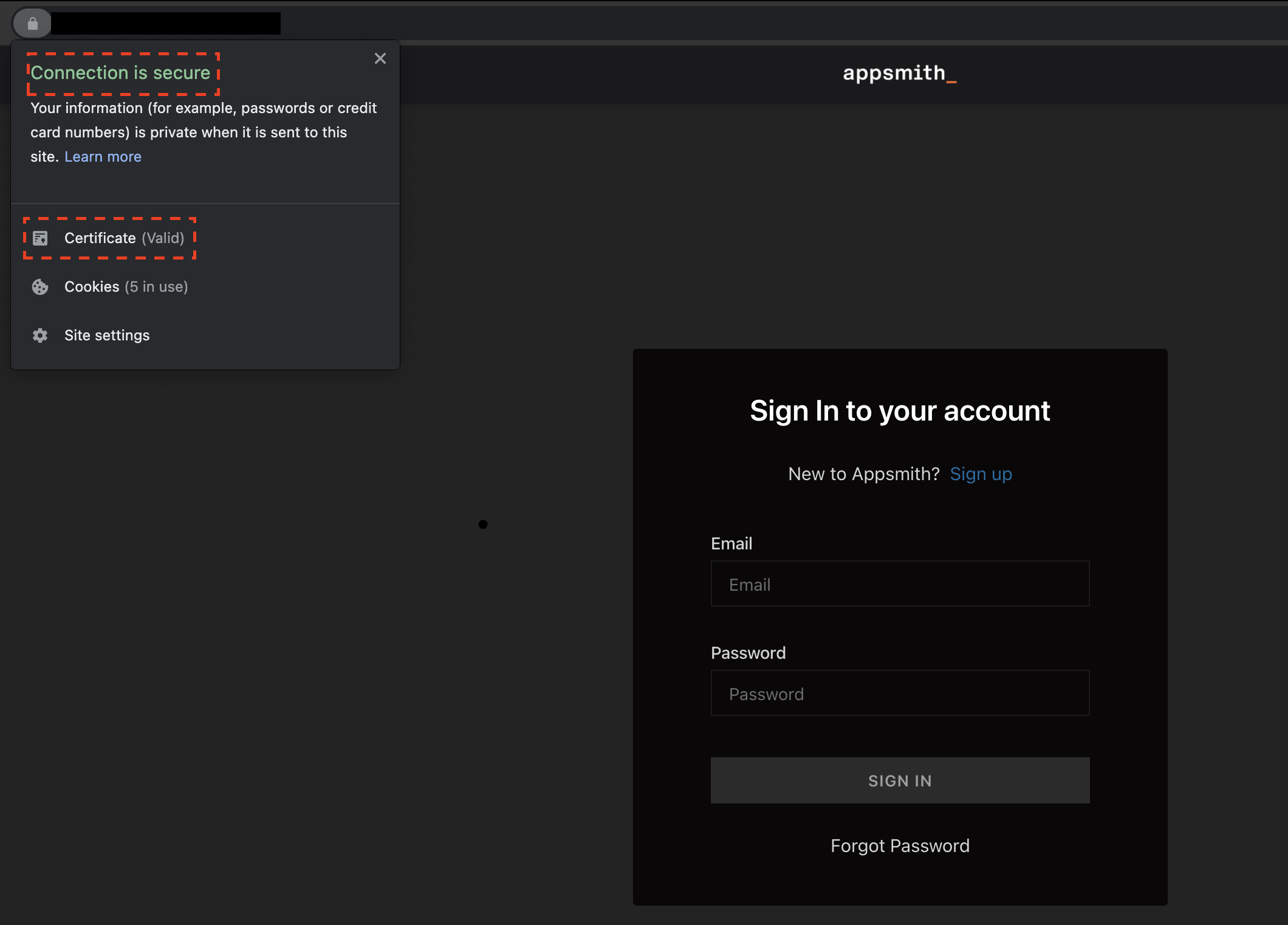
After the deployment completes, visit the domain in your browser and you should see the Appsmith site over a secure TLS connection with a valid Let's Encrypt certificate.
Useful links
To learn more about the topics discussed in this guide, use the links below: