 424d2f6965
## Description

This PR upgrades Prettier to v2 + enforces TypeScript’s [`import
type`](https://www.typescriptlang.org/docs/handbook/release-notes/typescript-3-8.html#type-only-imports-and-export)
syntax where applicable. It’s submitted as a separate PR so we can merge
it easily.

As a part of this PR, we reformat the codebase heavily:
- add `import type` everywhere where it’s required, and
- re-format the code to account for Prettier 2’s breaking changes:
https://prettier.io/blog/2020/03/21/2.0.0.html#breaking-changes

This PR is submitted against `release` to make sure all new code by team
members will adhere to new formatting standards, and we’ll have fewer
conflicts when merging `bundle-optimizations` into `release`. (I’ll
merge `release` back into `bundle-optimizations` once this PR is
merged.)

### Why is this needed?

This PR is needed because, for the Lodash optimization from
7cbb12af88,
we need to use `import type`. Otherwise, `babel-plugin-lodash` complains
that `LoDashStatic` is not a lodash function.

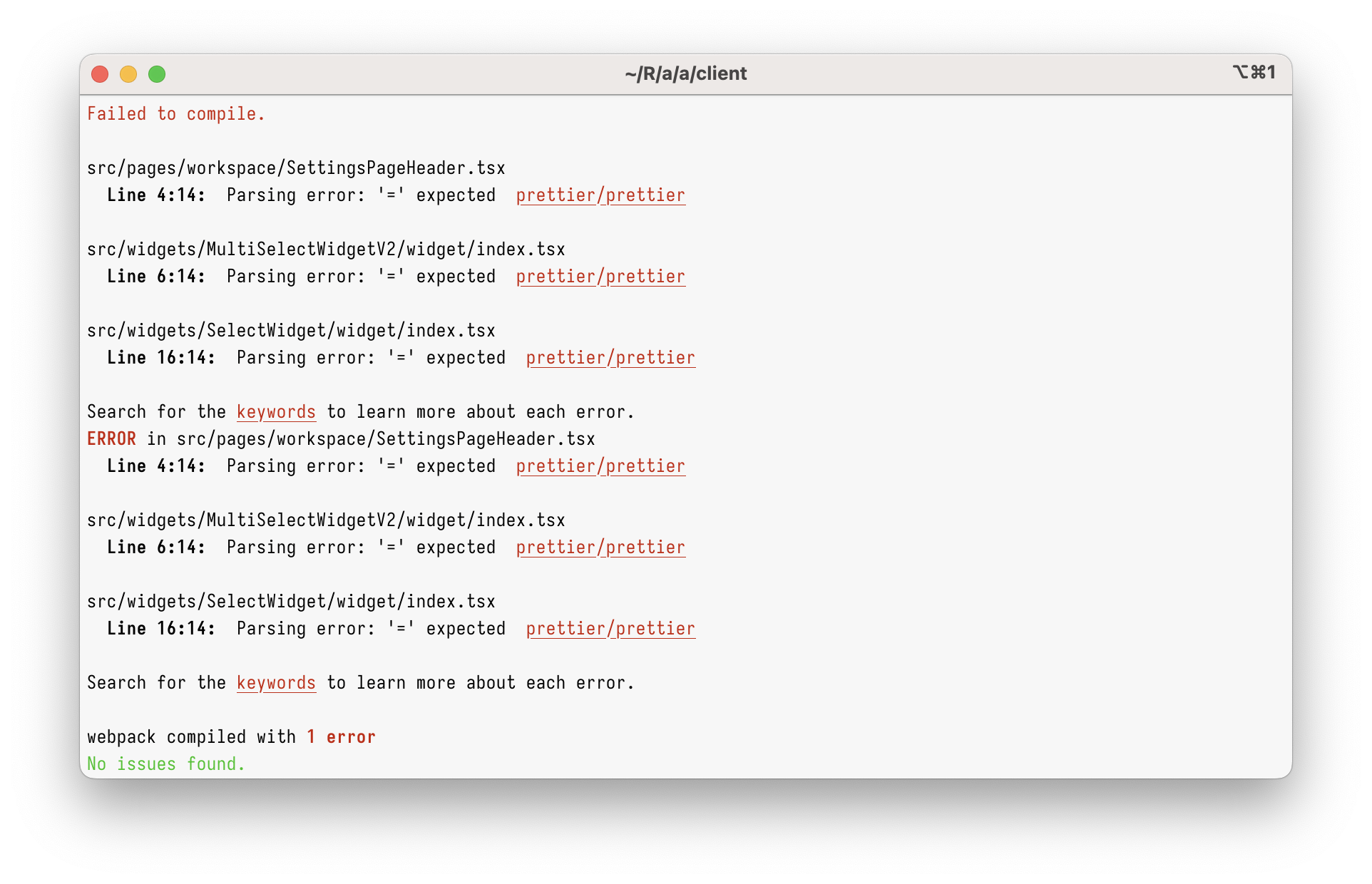
However, just using `import type` in the current codebase will give you
this:

<img width="962" alt="Screenshot 2023-03-08 at 17 45 59"
src="https://user-images.githubusercontent.com/2953267/223775744-407afa0c-e8b9-44a1-90f9-b879348da57f.png">

That’s because Prettier 1 can’t parse `import type` at all. To parse it,
we need to upgrade to Prettier 2.

### Why enforce `import type`?

Apart from just enabling `import type` support, this PR enforces
specifying `import type` everywhere it’s needed. (Developers will get
immediate TypeScript and ESLint errors when they forget to do so.)

I’m doing this because I believe `import type` improves DX and makes
refactorings easier.

Let’s say you had a few imports like below. Can you tell which of these
imports will increase the bundle size? (Tip: it’s not all of them!)

```ts
// app/client/src/workers/Linting/utils.ts
import { Position } from "codemirror";
import { LintError as JSHintError, LintOptions } from "jshint";
import { get, isEmpty, isNumber, keys, last, set } from "lodash";
```

It’s pretty hard, right?

What about now?

```ts
// app/client/src/workers/Linting/utils.ts
import type { Position } from "codemirror";
import type { LintError as JSHintError, LintOptions } from "jshint";
import { get, isEmpty, isNumber, keys, last, set } from "lodash";
```

Now, it’s clear that only `lodash` will be bundled.

This helps developers to see which imports are problematic, but it
_also_ helps with refactorings. Now, if you want to see where
`codemirror` is bundled, you can just grep for `import \{.*\} from
"codemirror"` – and you won’t get any type-only imports.

This also helps (some) bundlers. Upon transpiling, TypeScript erases
type-only imports completely. In some environment (not ours), this makes
the bundle smaller, as the bundler doesn’t need to bundle type-only
imports anymore.

## Type of change

- Chore (housekeeping or task changes that don't impact user perception)


## How Has This Been Tested?

This was tested to not break the build.

### Test Plan
> Add Testsmith test cases links that relate to this PR

### Issues raised during DP testing
> Link issues raised during DP testing for better visiblity and tracking
(copy link from comments dropped on this PR)


## Checklist:
### Dev activity
- [x] My code follows the style guidelines of this project
- [ ] I have performed a self-review of my own code
- [ ] I have commented my code, particularly in hard-to-understand areas
- [ ] I have made corresponding changes to the documentation
- [x] My changes generate no new warnings
- [ ] I have added tests that prove my fix is effective or that my
feature works
- [ ] New and existing unit tests pass locally with my changes
- [ ] PR is being merged under a feature flag


### QA activity:
- [ ] Test plan has been approved by relevant developers
- [ ] Test plan has been peer reviewed by QA
- [ ] Cypress test cases have been added and approved by either SDET or
manual QA
- [ ] Organized project review call with relevant stakeholders after
Round 1/2 of QA
- [ ] Added Test Plan Approved label after reveiwing all Cypress test

---------

Co-authored-by: Satish Gandham <hello@satishgandham.com>
Co-authored-by: Satish Gandham <satish.iitg@gmail.com>
112 lines
5.2 KiB
TypeScript
112 lines
5.2 KiB
TypeScript
import { areIntersecting } from "utils/boxHelpers";
|
|
import { pushToArray } from "utils/helpers";
|
|
import type { NodeSpace, TreeNode } from "./constants";
|
|
import { MAX_BOX_SIZE } from "./constants";
|
|
import { getNearestAbove } from "./helpers";
|
|
// This function uses the spaces occupied by sibling boxes and provides us with
|
|
// a data structure which defines the relative vertical positioning of the boxes
|
|
// in the form of "aboves" and "belows" for each box, which are array of box ids
|
|
export function generateTree(
|
|
spaces: Record<string, NodeSpace>,
|
|
layoutUpdated: boolean,
|
|
previousTree: Record<string, TreeNode>,
|
|
): Record<string, TreeNode> {
|
|
const spaceMap: Record<string, NodeSpace> = spaces;
|
|
|
|
const _spaces: string[] = Object.keys(spaceMap);
|
|
// If widget doesn't exist in this DS, this means that its height changes does not effect any other sibling
|
|
_spaces.sort((A, B) => {
|
|
const a: NodeSpace = spaceMap[A];
|
|
const b: NodeSpace = spaceMap[B];
|
|
//if both are of the same level and previous tree exists, check originalTops
|
|
if (a.top === b.top && previousTree[a.id] && previousTree[b.id]) {
|
|
return (
|
|
previousTree[a.id].originalTopRow - previousTree[b.id].originalTopRow
|
|
);
|
|
}
|
|
return a.top - b.top;
|
|
}); // Sort based on position, top to bottom, so that we know which is above the other
|
|
|
|
const aboveMap: Record<string, string[]> = {};
|
|
const belowMap: Record<string, string[]> = {};
|
|
|
|
const tree: Record<string, TreeNode> = {};
|
|
|
|
// For each of the sibling boxes
|
|
for (let i = 0; i < Object.keys(spaces).length; i++) {
|
|
// Get the left most box in the array (Remember: we sorted from top to bottom, so the leftmost will be the top most)
|
|
const _curr: string | undefined = _spaces.shift();
|
|
if (_curr !== undefined) {
|
|
// Create a reference copy as we need to override the bottom value
|
|
const currentSpace = { ...spaceMap[_curr] };
|
|
// Add a randomly large value to the bottom; this will help us know if any box is below this box
|
|
currentSpace.bottom += MAX_BOX_SIZE;
|
|
// For each of the remaining sibling widgets
|
|
for (let j = 0; j < _spaces.length; j++) {
|
|
// Create a reference copy as we need to override the bottom value
|
|
const comparisionSpace = { ...spaceMap[_spaces[j]] };
|
|
// Add a randomly large value to the bottom; this will help us know if any box is below this box
|
|
// TODO(abhinav): This addition may not be necessary, as we're only looking to see if these boxes
|
|
// are below the currentSpace
|
|
comparisionSpace.bottom += MAX_BOX_SIZE;
|
|
// Check if comparison space has an overlap with current space
|
|
if (areIntersecting(currentSpace, comparisionSpace)) {
|
|
// If there is an overlap, comparisonSpace is below the current space
|
|
// so, we update the aboveMap and belowMap accordingly
|
|
aboveMap[comparisionSpace.id] = pushToArray(
|
|
currentSpace.id,
|
|
aboveMap[comparisionSpace.id],
|
|
) as string[];
|
|
belowMap[currentSpace.id] = pushToArray(
|
|
comparisionSpace.id,
|
|
belowMap[currentSpace.id],
|
|
) as string[];
|
|
}
|
|
}
|
|
// Get the originalTop and originalBottom from the previous tree.
|
|
// This is so that we can get close to the original (user defined) positions of the boxes
|
|
// For example, if box1 increases in size and pushes box2 by 100 rows, while box3 is also above box2
|
|
// When the box1 subsequently decrease by 50 rows, we need to maintain spacing between box3 and box2
|
|
// Otherwise, if box1 happens to go below the bottomRow of box3, box2 will tend to overlap with box3.
|
|
let originalTopRow = previousTree[currentSpace.id]?.originalTopRow;
|
|
let originalBottomRow = previousTree[currentSpace.id]?.originalBottomRow;
|
|
// We also udpate the original if the layout is being updated
|
|
// This happens when the user repositions/resizes boxes
|
|
// If the previousTree doesn't have any originals, we can assume that this is the
|
|
// first time we're generating the tree, hence we need to keep the current top and bottom
|
|
// for subsequent tree generation
|
|
if (originalTopRow === undefined || layoutUpdated) {
|
|
originalTopRow = currentSpace.top;
|
|
}
|
|
if (originalBottomRow === undefined || layoutUpdated) {
|
|
originalBottomRow = currentSpace.bottom - MAX_BOX_SIZE;
|
|
}
|
|
|
|
tree[currentSpace.id] = {
|
|
aboves: aboveMap[currentSpace.id] || [],
|
|
belows: belowMap[currentSpace.id] || [],
|
|
topRow: currentSpace.top,
|
|
bottomRow: currentSpace.bottom - MAX_BOX_SIZE,
|
|
originalTopRow,
|
|
originalBottomRow,
|
|
distanceToNearestAbove: 0,
|
|
};
|
|
}
|
|
}
|
|
|
|
for (const boxId in tree) {
|
|
// For each box, get the nearest above node
|
|
// Then get the distance between this node and the nearest above
|
|
// We'll try to maintain this distance when reflowing due to auto height
|
|
// We also need to make sure that the nearest above doesn't go below 0, otherwise,
|
|
// they can overlap.
|
|
const nearestAbove = getNearestAbove(tree, boxId, {});
|
|
if (nearestAbove.length > 0) {
|
|
const distance = tree[boxId].topRow - tree[nearestAbove[0]].bottomRow;
|
|
tree[boxId].distanceToNearestAbove = Math.max(distance, 0);
|
|
}
|
|
}
|
|
|
|
return tree;
|
|
}
|